1. Blowing Activities
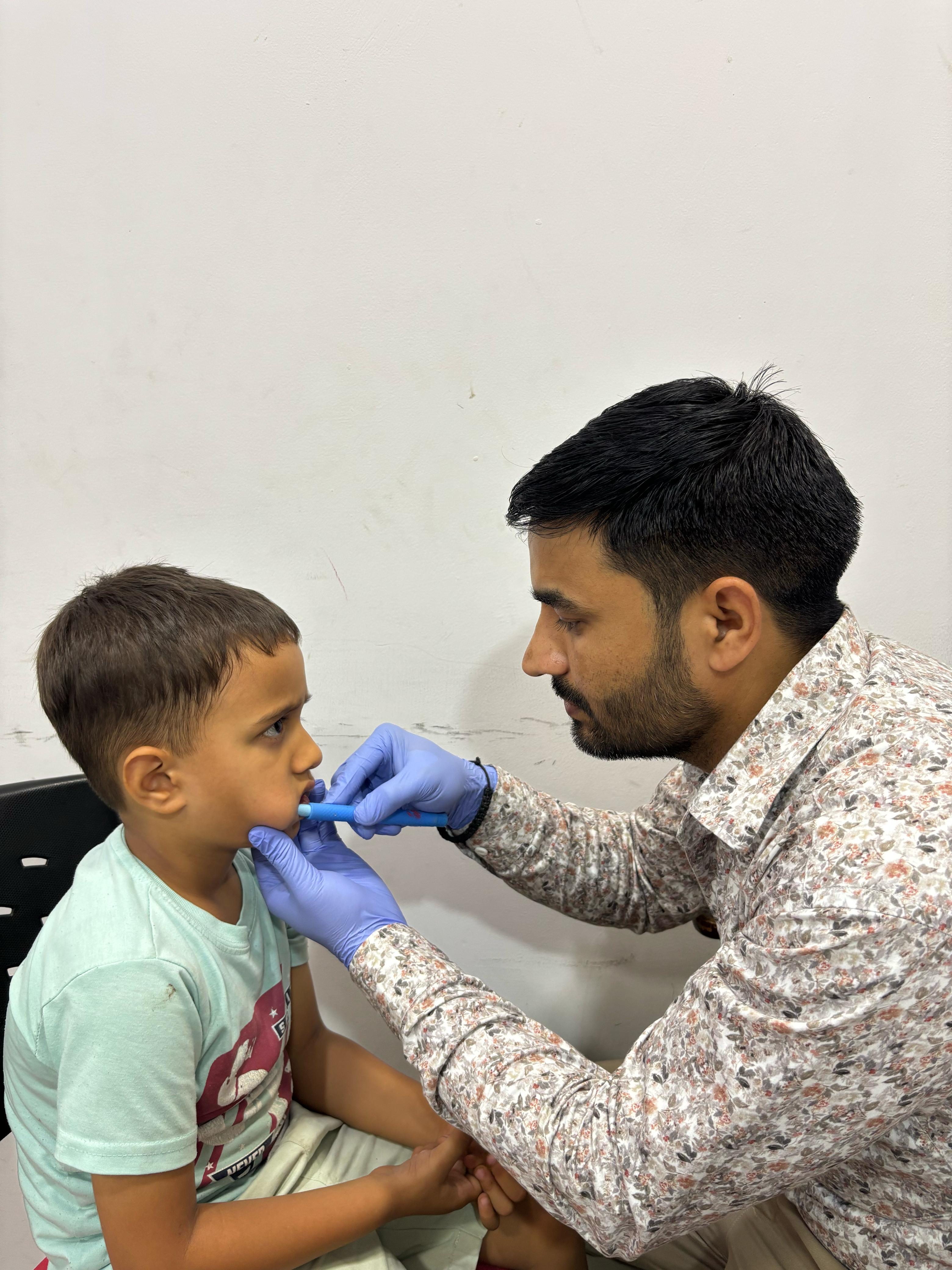
(Candle blowing, bubble blowing, using vessels etc.) Helps build oral motor strength and breath control necessary for speech production.
2. Pronation and Duration Training
Focuses on how long and how clearly a child can produce sounds, enhancing speech intelligibility.
3. Play-Based Learning
Using games, toys, flashcards, pegboards, and puzzles to build engagement and vocabulary naturally.
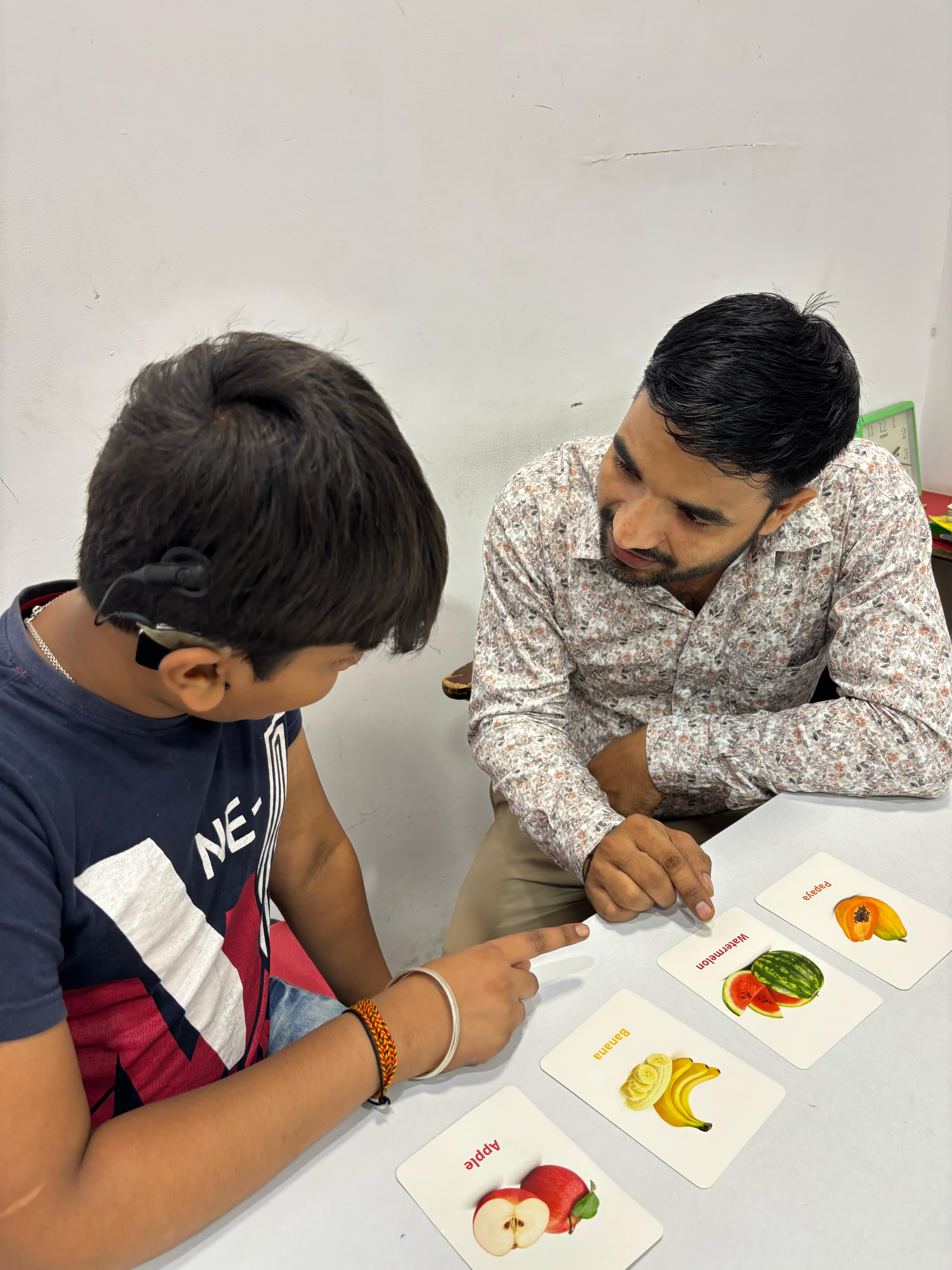
4. Picture Cards for Vocabulary Building
Children are introduced to new words and concepts through visual tools, aiding memory and word recall.
5. Repetition and Modeling
Therapists speak slowly and clearly, repeating words and showing correct articulation to build correct usage.
6. Mirror Exercises
Used to improve articulation by helping children observe their own mouth movements during sound production.
7. AAC Tools for Non-Verbal Children
Use of Augmentative and Alternative Communication tools (like picture boards, tablets, and sign language) to give children a voice.
8. Short Story Activities
Simple, engaging stories are used to expand sentence formation, comprehension, and expressive language.
9. Real Objects & Simple Language
Therapists use daily life objects and simple, clear language to build functional vocabulary.
10. Word and Sentence Repetition
Practice and reinforcement of commonly used phrases to build fluency and confidence.
11. Praise and Positive Reinforcement
Every attempt at communication is acknowledged and praised to build motivation and self-esteem.