Below is a detailed list of activities used in our Occupational Therapy sessions:
1. Wall Push-Ups and Animal Walks
Fun, strength-building exercises like bear crawls, crab walks, and frog jumps improve body awareness, motor coordination, and core strength. These activities also help release excess energy and regulate sensory input.
2. Emotion Regulation Games
Through activities like emotion cards and mirror-based facial expression games, children learn to identify, name, and appropriately express feelings — a key skill for emotional and social development.
3. Sequencing and Planning Tasks
Simple task-based activities such as making sandwiches or following visual schedules help children enhance memory, logical thinking, and task completion skills.
4. Sound and Rhythm Activities
Children use instruments like shakers, drums, and clapping games to build auditory processing, improve timing, and increase sustained attention and listening skills.
5. Tactile Exploration Stations
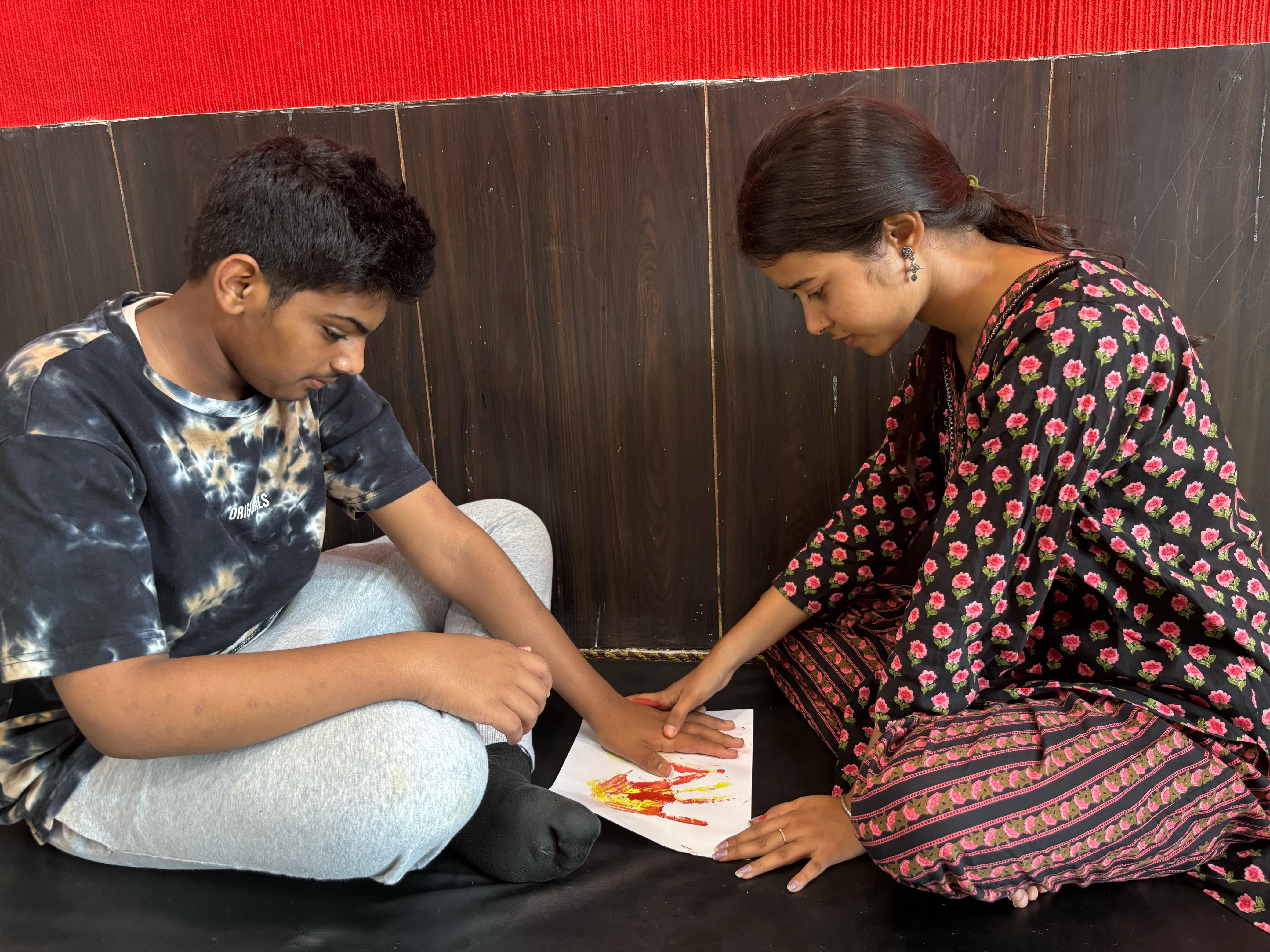
Hands-on exploration of textures through touch boards, fabric books, and textured toys supports sensory processing, helps reduce tactile defensiveness, and promotes calm.
6. Shape and Color Sorting
Visual games involving matching and sorting enhance pattern recognition, visual memory, fine motor control, and cognitive categorization.
7. Theraputty Exercises
Activities with theraputty (pinching, rolling, squeezing) help develop finger strength, grip control, and hand endurance for writing and fine motor tasks.
8. Therapeutic Swinging
Swinging in a controlled environment stimulates the vestibular system, helping regulate mood, improve balance, and calm overstimulated sensory systems.
9. Movement Breaks
Short bursts of structured movement (jumping, stretching, marching) provide sensory input, regulate energy levels, and help improve focus and self-regulation.
10. Calming Techniques / Deep Pressure
Deep pressure input through weighted objects, body squeezes, or calm-down corners helps soothe anxiety, promote relaxation, and enhance body awareness.
11. Oral Motor Play
Activities like blowing bubbles, whistles, or chewing tools strengthen mouth muscles and improve speech clarity, oral awareness, and feeding skills.
12. Fine Motor Play
Play-based tasks such as pegboards, puzzles, bead threading, and playdough develop hand strength, coordination, and precision required for writing, dressing, and eating.
13. Gross Motor Obstacle Course
Obstacle courses with climbing, crawling, balancing, and jumping challenges enhance coordination, strength, and spatial navigation.
14. Sensory Bins
Tactile play using rice, beans, water, or sand supports calming, fine motor skills, and sensory exploration in a safe and controlled way.
15. Handwriting Practice
Children engage in writing using chalk, sand trays, or pencil grips to improve pencil control, letter formation, and writing endurance in fun and interactive ways.
16. Scissor Skills
Practicing with safety scissors and cutting lines or shapes helps build precision, coordination, and hand strength needed for classroom tasks.
17. Dressing Skills Practice
Using dressing boards or real clothes, children learn to button, zip, tie, and dress themselves, promoting independence in daily life.
18. Feeding and Utensil Use
Therapists teach children how to properly use forks, spoons, and cups, along with safe chewing and swallowing techniques to support independent eating.
19. Visual Perception Games
Games like puzzles, matching cards, and mazes develop visual discrimination, tracking, spatial awareness, and problem-solving.
20. Balance and Core Strength Activities
Tools like therapy balls, yoga poses, and balance boards are used to build posture control, trunk stability, and motor coordination.
21. Bilateral Coordination Tasks
Activities such as clapping games, stringing beads, and paper tearing help both hands work together — a vital skill for dressing, cutting, and writing.